Friday, March 28, 2008

Staithes Car Park


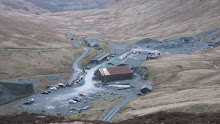
Recently I visited the small hamlet of Staithes on the Cleveland/North Yorkshire border and what a day to visit. It was during a period when little old England was getting hammered by strong winds from the Atlantic, however the wind kind of enhanced my visit and added to the enjoyment of being there especially with regard to the waves that the North Sea was sending against the rocks and breakwater of Staithes harbour. Staithes is a seaside village which is divided between Yorkshire & Cleveland by Roxby Beck with about 90% of Staithes being in North Yorkshire. In times past it was one of the largest and most productive fishing centres in England by the North Sea, however nowadays it is largely a tourist destination due to it's attractive olde England appearance. Staithes is noted for its sheltered harbour, bounded by high cliffs and two long breakwaters, a mile to the north is Boulby cliff which is the highest cliff in England. The cliffs around Staithes also are popular with sea birds and it can get a bit noisy. Staithes population has dwindled due to a lot of the cottages being owned by people from Leeds and York for example and during the winter it can appear like a ghost town with few visitors but this is a great time to visit if you can handle the stormy weather. Staithes still maintains its tradition and many of the local women still wear their Staithes bonnets (some can still be bought today in the Gift Shop in Staithes!) for the annual nightgown parade, and the Fisher Men's choir is still going strong along with local participation in the local RNLI Lifeboat. In 1745-1746, Staithes's most famous son (born in Marton near Middlesbrough), the young James Cook worked in Staithes as a grocer's apprentice where he first gained his passion for the sea. Later he moved to Whitby where he joined the Royal Navy. William Sanderson's shop, where Cooky worked, was destroyed by the sea, but parts were recovered and incorporated into "Captain Cook's Cottage". A local family has lived here for a number of generations. Should you find yourself in Staithes make sure you visit the Royal George or the Cod & Lobster for a pint of the local and a bite to eat. One last thing Staithes is famous for , it has the most dangerous car park in England as can be seen by my picture. When I was there a local resident by the name of Sandra climbed down to investigate this strange sight. ( I suspect she's a menber of the Royal Marines Reserve but the secret is out now)

Sunday, March 23, 2008

Great Gable


Great Gable is a beautiful mountain situated at Wasdale Head in Cumbria opposite the Scafell Masiffs and adacent to Black Sail Pass which nestles between the mighty Pillar and haystacks. I chose to tackle it from Seathwaite rather than from Wasdale Head as I had just recently climbed Scafell Pike from Wasdale Head. The climb started with a scramble up Sour Milk Gill for about 1000 ft followed by a long drawn out climb between Base Brown and Brandreth to ascend Green Gable. Green Gable is to the rear of Great Gable and it gives on a clear day wonderful views of Gable Crag on the back of Great Gable along with a fantastic view down the Black Sail Pass and the River Liza. From Green Gable we dropped slightly to the south and then began the climb up Great Gable. The weather remained unpredictable with cloud and rain followed by sunny spells but I was able to see opposite Sprinkling Tarn and further on the summit of Scafell Pike. Finally reaching the top I was met by a strong wind which denied me being able to boil up some water for a cup of tea. The top of Great Gable indicates that it is a war memorial, and it is in fact the largest memorial in Europe with a large number of climbers grouping on its summit each rememberance Sunday. Down below to the south is Wastwater and Wasdale head with the Wasdale Head Inn, home of the biggest liar competition. http://www.wasdaleheadinn.co.uk/.
Whilst on the top I slipped and twisted my ankle which made it difficult coming down especially in the dark but hopefully I will find the time to visit Great Gable again to check out its world famous needles on the south traverse. Pictures include the sun going down over Wast water, a view down Black Sail Pass , myself on Great Gable & myself on Green Gable with Great Gable crag behind me.

Sunday, March 16, 2008

Not your normal High Street


This last week I have been up in England's Lake District in the county of Cumbria. Cumbria , situated in the north west is England's most mountainous county filled
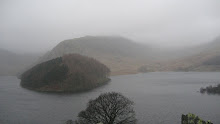
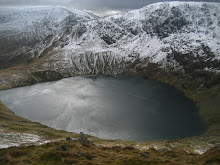
with wonderful peaks with names suchas Haystacks, Pillar and Hellvelyn to mention but a few, They are not mountains on the scale of the Himalaya's or Southern Alps but non the less in my opinion they are just as beautiful,if not more so. There is so much history to be found in these English mountains from shepherds and their flocks to slate miners. This week I went to climb a mountain known simply as 'High Street' in the vicinity of Haweswater. The name High Street does not imply that you will find a butchers or bakers on the summit rather it takes you back to the day when it's summit was a high up Roman road linking their garrisons at Ambleside and Brougham and on the south side of the mountain lies the Troutbeck slopes where Scotch invaders were repulsed by the shepherds, dalesmen and farmers whom made the summit their playground and feasting place during their annual horse racing meets. I made my ascent via Rough Crag which at first is a pleasant climb with the odd scramble thrown in to get your hands dirty however the English weather was quite bad at the time with high winds from the Atlantic buffeting us as we ventured into exposed area's. We made it into the snow about half way up Long Stile which is around 100 yards from the top but due to the severe winds in this unsheltered area we decided to come back down via Blea tarn. No sooner had we turned back when the summit became a white out with a snow storm coming in from the south. The climb down via Blea Tarn leads one to a lovely body of water with a small dam surrounded by the mountain, and a gentle walk down to Haweswater following Blea Water Beck through gorgeous coloured fells with a number of waterfalls thrown in to impress. If your interested in this part of England may I recomend the books of A Wainwright or the DVD's of Wainwright's walks presented by Julia Bradbury.


Thursday, March 13, 2008

High Cup Nick


One of the many treasures to be found on England's Pennine Way, a rugged walk that will take you down the hilly spine of England, is High Cup Nick. It is situated on the border's of Cumbria & County Durham and can be described as 'A deep chasm on the Pennine fellside, this famous nick, a dramatic geological formation at the top of High Cup Gill is part of the well-known Whin Sill, and overlooks the best glaciated valley in Northern England. Here you can see the grey-blue dolerite crags which also form High Force and Cauldron Snout (Waterfalls)'. I walked from the village of Dufton ,north to Maize Beck following it east to join the Pennine Way and on to High Cup Nick. It is an awesome sight and pictures simply do no give you the scale and majesty of it. It is a windy place so one needs to be careful when near the edges in certain area's depending on which direction the wind is blowing but it has to be seen from all 3 sides followed by a climb down into its deep chasm. You can finish your walk back in Dufton followed by a swift half in the pub.

Monday, February 19, 2007

Dungeness


Tuther day I took my lion cubs down to the south coast, we went to Dungeness. Let me tell you a little bit about Dungeness. It's the site of one of the largest expanses of shingle in the world and the variety of wildlife in the area extends to over 600 differing types of plant, making it one of the best places in England to find insects such as moths, bees, beetles & spiders. The flooded gravel pits behind the shingle provide habitat for many migratory coastal birds. Another thing situated on the shingle is a massive Nuclear power station which oddly enough does not actually look out of place, in a strange way it enhances what Dungeness is, or at least it does to me. There are two lighthouses at Dungeness which warn ships not to get too close, as the English channel is the worlds busiest shipping lane. There is a nice little pub by the name of the Brittania inn, the fish & chips are 'morish' and the liquid refreshment very nice. We had munch then took a stroll along the shingle, beach fishermen were casting their lines out to see and the waves were canny high, it was a beautiful sight, my young cubs enjoyed running at he waves and collected some lovely sea shells left over by the fishing boats which lie in various states of repair along the shingle. Some of these boats are obviously still in use but others have seen better days and remain alongside their delapadated huts reminding visitors of Dungenesse's rich heritage. We walked around the boats and other relics of the fishing trade that can be found on the shingle and vowed to come back in the summer for a picnic and to collect more shells. I may also pop into the Brittania for a swift half. If you come to Dungeness you must also check out some fo the dwellings littered along the road, especially Prospect and Ness cottages, they have done some remarkable things in their open gardens using items washed up on the beach along with fishing relics, very artistic indeed. Dungeness is well worth a visit, I anticipate many more visits in the coming years. Why not give it a try!

Monday, January 15, 2007

Treasures of 2006


We are now well into 2007 and I have been making plans on where in England to take my young lion cubs this coming year, I have many places in mind especially up in the North East , some we have visited before and some we haven't. I will of course be posting our adventures on this blog but lets go back to last year. In 2006 my young cubs stood on the south coast of England at the symbolic white cliffs of Beachy Head they also stood on England's remote northern border at the windswept Carters Bar, in between these two rugged symbols of our land they saw mighty castles, magnificent cathedrals, beautiful beaches, green hills, ruins, traditional villages, fayre's and events & even the battle of Hastings on Senlac ridge. To look back on the last year I have posted a number of pictures with this entry to give you a taste of what our England has to offer you. Come to England, It's really cool ! By the way , the pictures are of Bodiam castle, Dunstaburgh castle ruins, Angel of the north, Hever castle, the English border at Carters Bar, Lindisfarne castle & the white cliffs of Beachy head.


Friday, December 22, 2006

Greenwich , centre of time.


On Saturday 16th December I took my young lion cubs south of the river Thames to visit Greenwich, its one of my favourite parts of Englands capital, it has a strong naval heritage and is home to the Royal Navy college, along with it's fine museum also the famous wool and tea clipper known to all Englishman from my generation and older as the Cutty Sark. It's the fastest tea clipper ever built and defines the age of sail.
Greenwich is a great place for a day out, fine pubs and restraunts, a great market and a walk along the Thames, not to mention the Cutty sark and navy Museum, but one place you must go is on the hill overlooking Greenwich, it's called the Royal Observatory. From this point you can take in a magnificent view of London as the picture above shows. Also at the observatory is the greenwich meridian Line.
What is the Meridian Line?
The Meridian Line is an imaginary line which runs from the
North Pole to the South Pole. By international convention it runs through "the primary transit" instrument (main telescope) at the Royal Observatory in Greenwich. It is known at Zero Longitude and it is the line from which all other lines of longitude are measured. This includes the line that runs 180° away from Greenwich also known as the International Date Line.
In the other picture above you can see my young cubs standing on the Meridian line, on one side it's the east and on the other side it's west , they are standing at 0' longitude , the centre of time. If your visiting London, why not sail down the Thames to Greenwich , do a spot of retail therapy at the market followed by a nice pub lunch and then walk up the hill to visit the Observatory, taking in the view and standing at 0' longitude.

Thursday, December 21, 2006

Time travel in North East England.


No I have not invented a time machine and sent my Lion Cubs back to 1850's County Durham ( I plan on inventing one when I get a bit more spare time) This wonderful place is the Beamish museum situated near Stanley in the North West of the Prince Bishop county. Beamish is set within a picturesque 300-acre valley, it's a working museum showing how the good people of north east England lived and worked in the years between 1825 & 1913. The site is split into various themes such as the town, the colliery village and pit, the manor, railway station and other areas, all of which can be visited. You will see people dressed in the clothes of the era whom will interact and educate you as to how things were. It really is like going back in time. My particular favourites are eating the freshly made cinder toffee at the sweet shop and going down the drift mine, my lion cubs enjoy riding on the trams, stagecoaches and buses which you catch to each area of the museum.
Beamish is a great family day out and well worth a visit if your passing through the Prince Bishop county of Durham.

Thursday, December 14, 2006

Bamburgh's Northumbrian fortress


This magnificent fortress is Bamburgh castle situated on the Northumberland coast just south of Lindisfarne holy island.
Northumberland has more castles than any other county, hardly surprising when it is situated along Englands northern border with the Scotch and this is my favourite of them all. On one side of the castle is the pretty village of Bamburgh and on the other side is the most beautiful stretch of sandy beach stretching around 3 miles south to Seahouses. Bamburgh castle is built on the site of a much older castle and it is itself the former capital of the Anglo Saxon kingdom of Northumbria, Bamburgh was originally known as Bebbanburh this was in honour of King Ethelfriths wife in the days when Northumbria stretched from the River Humber to the Firth of Forth. Just south of Bamburgh is the small harbour town of Seahouses, from here you can take a boat out to the Farne Islands to observe the wonderful sea life and visit the lighthouse, or you can stay on shore and eat some of the finest fish 'n' chips in England. Seahouses is quite small but has some wonderful traditional seaside gift shops and is a hive of activity during the summer months with locals from the North East whom flock there for day trips wearing their Sunderland or Newcastle shirts. If you are planning a visit to this beautiful part of England, may I recommend to you the Bamburgh Castle Hotel with fine views of the harbour and farne Islands.

Saturday, December 09, 2006

Rochester's Dickensian Festival


On December 2nd I took my young Lion Cubs down to Rochester on the river Medway in Kent. It was the annual Dickensian Christmas festival. It was the first time I had been to Rochester With the exception of a quick work related visit a few years ago and I have to say that I liked the place. It is not a stunning city but it has a likeable rough kind of English feel to it, a working city enhanced by it's Norman castle and cathedral. The narrow streets below the castle and cathedral were full of characters dressed In Victorian costume parading up and down and mingling with the visitors including a very believable Fagin, there were also various displays relating to the era and plenty of stalls offering traditional English fayre, the smell of roasting chestnuts is a particular favourite of mine.
Upon the castle green was a fair ground where I joined my littluns on the ferris wheel but left the other rides to their strong stomachs. It was a very nice day. Unfortunately we could not stay for the candlelight parade and snow machine Later in the day but next year we will be better prepared.

Tuesday, November 14, 2006

Bonfire Night


One of my favourite days of the English calendar is November 5th, We call it Guy Fawkes or Bonfire night. To cut a long story short : In 1605 a dodgy geezer by the name of Guy Fawkes and a few of his mates plotted to blow up King James 1st and our Houses of Parliament. This became known as the Gunpowder plot & thankfully it was discovered before the dodgy individuals involved could carry out their plan. Due to their being very naughty they were subsequently tortured and then executed.
Every year on November 5th the people of England remember this event by holding bonfire and firework parties throughout the land, either in their gardens or at large organised displays.
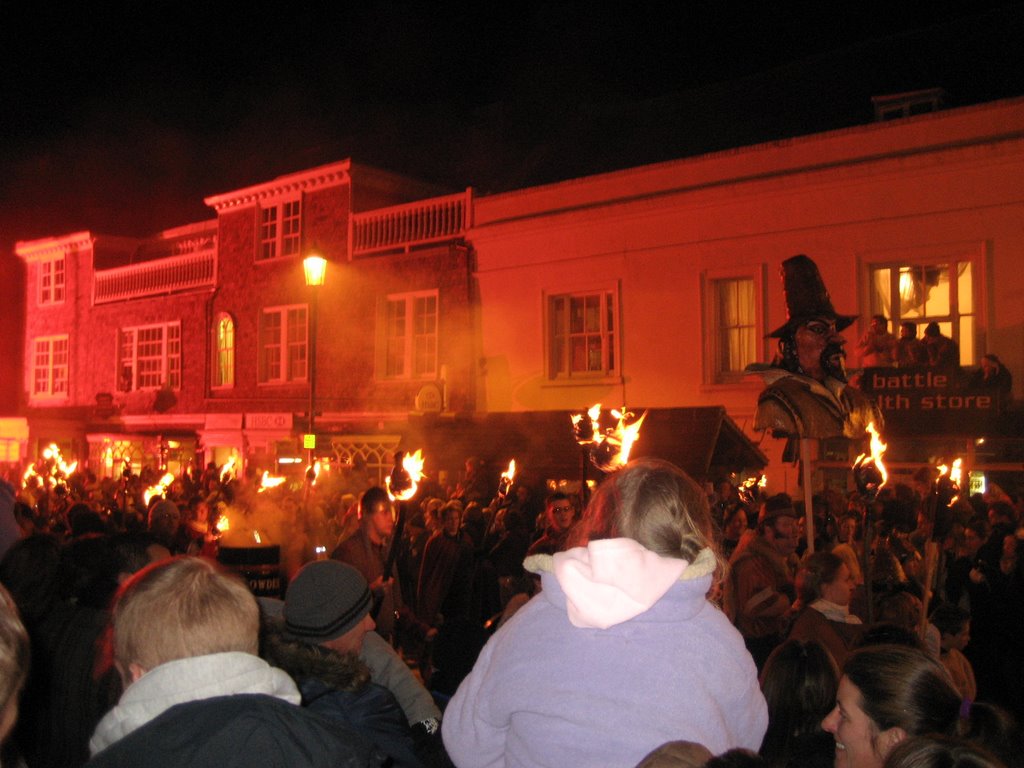
The oldest of these displays is the one held in the town of Battle in East Sussex, there are records of it going back as far as 1646, one record shows that in 1686 ,17 shillings and 6 pence was “expended at gunpowder treason for rejoicing”.
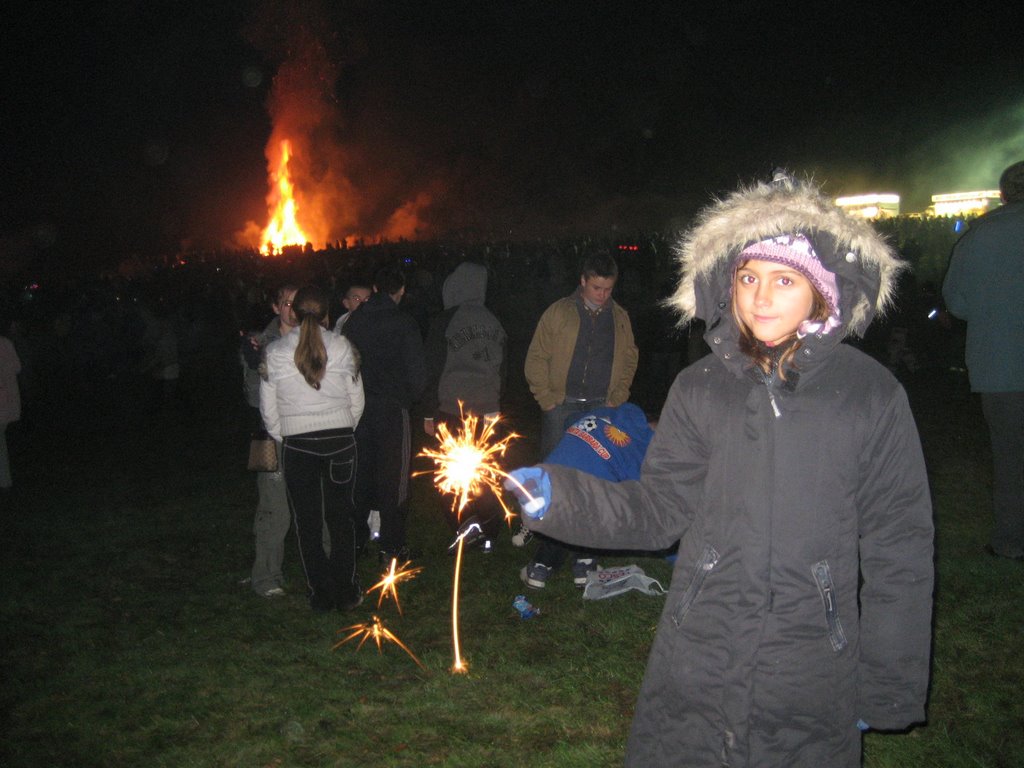
For the second year in a row I took my lion cubs down to Battle to see this display. We arrived early in order to get a good place to see the parade as the High Street gets packed with people coming to enjoy the evening. We took our place near the Abbey and waited for the parade to start. Crowds soon gathered and took their place on the street, fireworks and rockets were zooming above the old buildings and we saw the flaming torches of the parade appear at the top of the street. The parade consisted of various groups known as ‘bonfire boyes’ and they had differing themes of dress, some as Anglo Saxons, some as Ravens, Pirates and lots of other combinations, even a Homer Simpson was present this year. They paraded down the street with hundreds of flaming torches and stopped outside the Abbey where the Dean of Battle lit a bonfire to the sound of bangers and explosions. The parade then moved on and the crowds followed on behind as it moved on down to Senlac Hill. This is the hill where the battle of Hastings was fought. Finally on the battlefield we were treated to the lighting of the big bonfire and the most fantastic firework display, the finale being the explosion of an effigy of Tony Blair and Gordon Brown with rockets galore. If you find yourself in the south east of England for bonfire night 2007 why not come down to Battle. Check the following website for details:
http://www.battlebonfire.co.uk/

Tuesday, October 24, 2006

Justice in Northumberland.


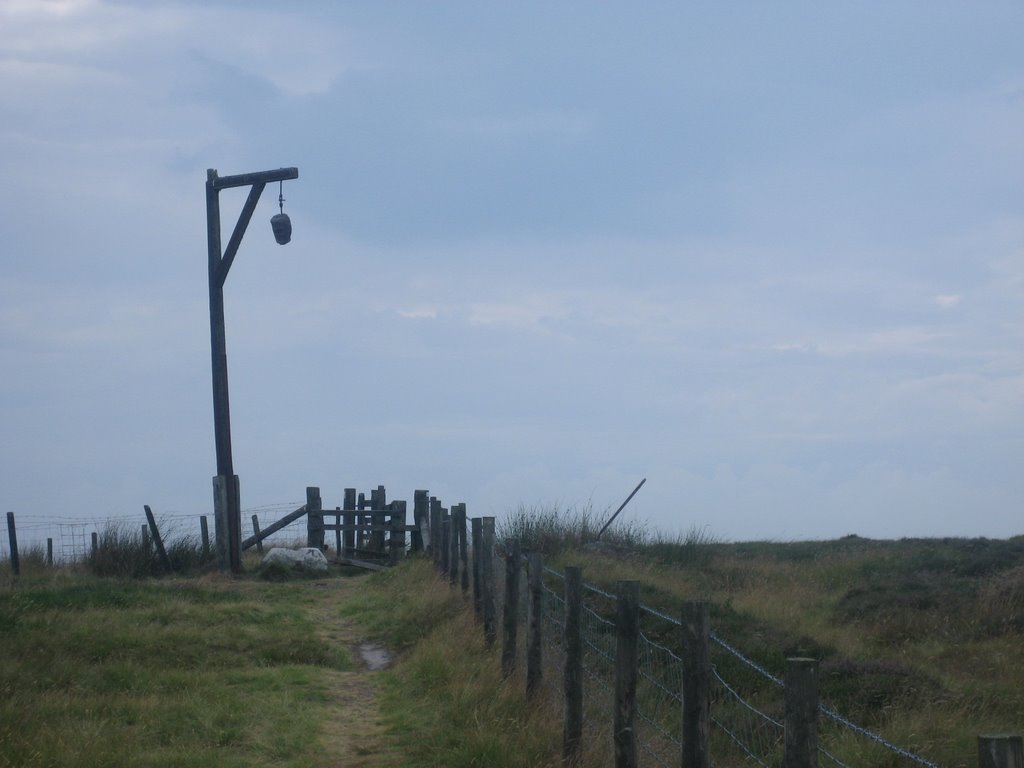
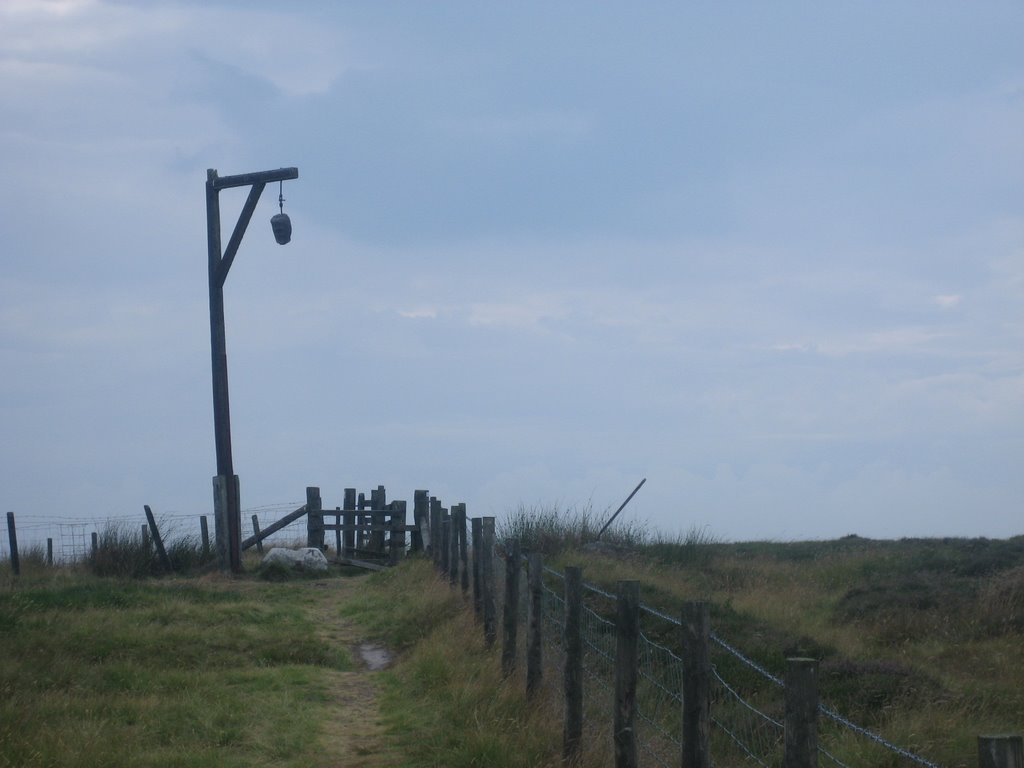
This intriguing monument goes by the name of Winters gibbet and it can be found on a lonely moorland road near Elsdon in Northumberland. It is guaranteed to stop any passers by in their tracks. The story behind it is this. In 1791 William Winter and Jane & Eleanor Clark were executed at the Westgate in Newcastle for the murder of Margaret Crozier. Crozier was an old lady living alone miles from anywhere and an easy target for the traveller Winter and the Clark girls, a pair of tinkers, who accompanied him to rob and murder the old lady. They were soon caught and paid the price for their crime. Following the execution the bodies were disposed of in different ways: the females dispatched to the surgeon's hall for dissection whilst the body of William Winter was hung in chains on the gibbet a few miles south of Elsdon within sight of the scene of his crime.The stone at it's foot is the base of a saxon cross which marked the highest point of this ancient drove road down which cattle were driven from Scotland to the English markets. Winter's body remained on the gibbet as a sight for the passing curious until his clothes rotted. Eventually his body was cut down, the bones scattered, and the skull sent to Mr Darnell of Newcastle. In time the original gibbet decayed, partly due to natural processes and partly due to the quaint country practice of rubbing pieces on the gums to cure toothache. Around 1867 Sir Walter Travelyan of Wallington ordered a replica, complete with wooden body, to be erected on his land. In time the wooden body disappeared following its use for target practice, till only the head remained, giving rise to the 20th century custom of hanging a fibre glass head on the replica gibbet. By the way, they don't hang people in Northumberland anymore.